
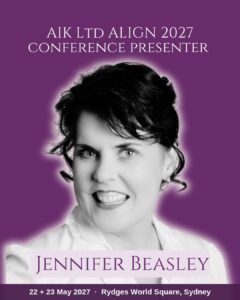
Jennifer discovered Kinesiology over 40 years ago and has studied Kinesiology, Neuro-Training, Naturopathy, Homeopathy and Herbal medicine. Prior to becoming a practitioner, Jennifer was a teacher for children with diverse needs. Using Neuro-Training had amazing results. Her quest for knowledge led Jennifer back to the Universal Principles of how we all recuperate. Using the Principles of Recuperation and muscle checking, Jennifer currently practices with a special focus on chronic and long term issues in clients. As the Director for the College of Neuro-Training, Jennifer is kept busy with a life of students, travel and her property in Tasmania working her Airbnb, growing organic veggies and sculpting glorious garden.
Jennifer is an Honorary Member of the AIK Ltd and has presented at Kinesiology conference within Australia and Internationally. Today Jennifer presents Challenging all there is in a Client by using Frequencies.
ALIGN Kinesiology Conference Welcomes
Jennifer Beasley
CEO for the College of Neuro-Training Pty Ltd.
Challenging all there is in a Client by using Frequencies
This presentation explores the role of frequencies in the healing process, challenging the misconception that they simply act as remedies. Discover how muscle response testing can help practitioners identify the most appropriate frequencies and their potency to stimulate, activate and challenge energetic patterns.
Through practical demonstrations and examples, learn to distinguish between resolving existing programming and creating new compensations, while exploring approaches to acute imbalances, hidden chronic conflicts and deeper energetic patterns. Gain a greater understanding of how to use frequencies more effectively to support meaningful, longer-term recuperation and achieve better outcomes for your clients.
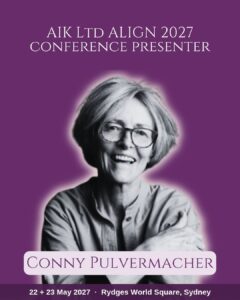
Conny Pulvermacher has been a clinical practitioner, yoga teacher and holistic health educator for more than twenty-five years. She has a Master’s degree in Education and holds qualifications in bodywork, nutrition and yoga, specialising in craniosacral therapy (biodynamic and structural). She runs a busy clinical practice at Elemental Health in St.Ives and Newport, NSW working with a diverse client base. Her very favourite clinic visitors are newborns but she also loves supporting those who have travelled the life journey for many decades. Conny was a finalist for the Australian Traditional Medicine Society ‘Practitioner of the Year’ award in November 2025.
Conny has developed an integrative approach to therapeutic practice combining the non-invasive approach of craniosacral therapy with myofascial release, positional release and kinesiology to facilitate the integration of experience at multiple levels.
She structures nutritional advice and movement therapy as additional tools to empower clients with self-help ability in their everyday life.
Conny has been teaching ATMS seminars Australia-wide since 2019 and has offered a wide range of integrative workshops in a variety of different forums focussing on holistic health, nutrition, movement and meditation. She is a craniosacral supervisor and mentor to an ever-growing student body.
Conny is currently the co-ordinator and co-teacher for the USA based Wellness Institute, offering three-year long diploma training courses in Craniosacral therapy held in Sydney.
ALIGN Kinesiology Conference Welcomes
Conny Pulvermacher
CEO of Elemental Health
Aligning to the Embryological Dynamism of the Central Nervous System
This presentation explores the profound therapeutic potential of embryological dynamism held within the central nervous system (CNS) throughout every stage of life, and its relevance in addressing chronic conditions. Bringing together the principles of Biodynamic Craniosacral Therapy (BCST) and Kinesiology, it examines how engaging with the body’s inherent health and self-regulatory capacity can help release deeply held stress patterns and restore systemic balance. Through an exploration of dynamic stillness, the craniosacral mechanism and kinesiology techniques, participants will gain insight into how the nervous system can move beyond persistent stress responses and reconnect with its innate potential for healing and regulation. A practical treatment sequence will demonstrate this integrated therapeutic approach.
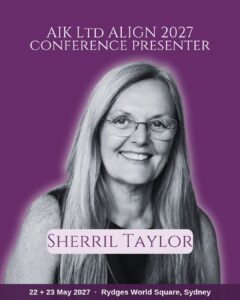
Sherril Taylor is the Principal Trainer and course developer of the International Institute of Applied Physiology (IIAP) and has been involved in Applied Physiology for more than 25 years. Her journey with Applied Physiology began in the late 1990s, and she went on to study and work extensively within the field. In 1999–2000, while living in Tucson, Arizona, Sherril began writing and developing the Applied Physiology course workbooks that have continued to grow and evolve alongside the work. Over the years, Sherril has taught Applied Physiology throughout Australia and internationally, training students and instructors and continuing to develop new ways of working within the AP holographic model.
Sherril continues to teach, write and develop Applied Physiology through IIAP. She has a particular passion for exploring the body’s energetic communication and bringing new ideas into the AP framework, including her latest work with sound, vibration and the human voice. Sherril is a Life Member of the AIK Ltd and has presented at Kinesiology conference within Australia and Internationally.
ALIGN Kinesiology Conference Welcomes
Sherril Taylor
Founder of IIAP
The Living Voice – Breath, Vibration and the AP 14 Meridian Hologram
The human body is a living instrument, with every tissue, organ and system continually communicating through electrical, chemical and vibrational processes. Inspired by the fascinating relationship between sound and the body’s response to vibration, this presentation explores the ancient tradition of sound healing, including the Six Healing Sounds (Liu Zi Jue) of Chinese Qigong, and how these concepts have inspired the development of the new Applied Physiology hologram, The AP 14 Balancing Sounds. Extending the traditional approach across the complete 14-meridian system, the hologram incorporates the 12 primary meridians, Governing Vessel and Central Vessel, followed by an AP Brain Integration Sound.
The presentation will explore the fascinating concepts of sound, resonance, entrainment, vibration and form, alongside traditional healing sounds and research into vocalisation and humming, before introducing and demonstrating how the AP 14 Balancing Sounds hologram brings these ideas together.
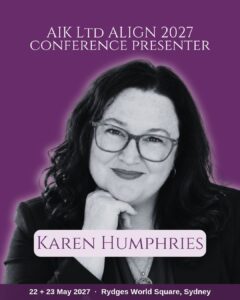
Karen Humphries is a Mental Health Counsellor, Advanced Kinesiologist, Hypnotherapist and Resource Therapist with more than twenty years’ experience supporting behavioural and emotional change. She is also a Trauma-Informed Coach, Wellness Coach and Intuitive Meditation Facilitator.
Through her Gippsland practice, Blooming From Within, Karen blends counselling, kinesiology, somatic breathwork and nervous-system regulation to support people navigating trauma, cancer, neurodivergence and major life transitions.
As a breast cancer conqueror, Karen brings lived experience of the cancer journey to her clinical work and writing. She is the author of This Is My Roar: Transform Your Trauma Tale and Holding the Helper: Supporting the Cancer Caregiver.
Karen translates complex nervous-system concepts into practical language that clients and practitioners can use straight away. Her work invites practitioners to get curious about what behaviour is protecting, to regulate before they correct, and to remember that two nervous systems are always in the therapeutic space. She is also a keynote speaker and retreat facilitator.
ALIGN Kinesiology Conference Welcomes
Karen Humphries
Advanced Kinesiologist | Mental Health Counsellor
Meerkats, Mountain Lions and the Cancer Caregiver: Restoring Alignment Through the Four Emotional Stages of Cancer
Cancer does not only happen to the person diagnosed. Beside them is usually a caregiver. A partner, parent, adult child or friend who drives to appointments, takes the notes, keeps the household running and smiles bravely in the waiting room. The patient is held by the medical system. The caregiver is often holding everything else. And very few people stop to ask them, “How are you?”
This presentation gives kinesiologists a clear, trauma-informed framework for supporting that caregiver. Drawing on her lived experience of breast cancer and more than twenty years of clinical practice, Karen maps the four emotional stages of cancer caregiving. Because when the practitioner understands and conveys the stages of cancer, the client feels understood and held.
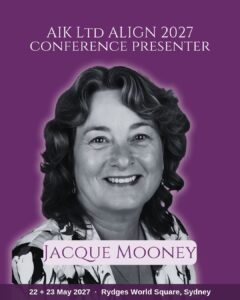
Jacque Mooney is an internationally recognised Kinesiologist, educator and presenter with over 30 years of experience in brain integration, holistic wellbeing and kinesiology education. Originally from Canada and now based in Australia, she has worked closely with Dr Charles Krebs for more than three decades and is a senior LEAP Faculty Member, Instructor Trainer, Mentor and Supervisor.
Jacque is also an Australian Faculty Instructor and Instructor Trainer in Applied Physiology, an instructor in the Stress Indicator Point System (SIPS), and the creator of Simply the Brain.
Drawing on decades of clinical practice, teaching and ongoing study, Jacque developed Simply the Brain to make the complexities of brain function and neurology accessible, practical and relevant to kinesiology practitioners.
Jacque has taught practitioners internationally and is passionate about continuing to explore our evolving understanding of the brain and body. Her teaching brings together neurology and kinesiology to help practitioners better understand stress, survival responses and the interconnected systems that influence how we function, adapt and respond.
ALIGN Kinesiology Conference Welcomes
Jacque Mooney
Internationally Recognised Kinesiologist, Educator and Presenter
Let’s find the leak
When working with stress and complex trauma, it can be tempting to focus on the area where the stress presents, but what if that isn’t where the problem begins? In Let’s Find the Leak, Jacque Mooney explores how the brain operates through interconnected circuits and feedback systems, and how physical and social survival responses can be influenced by deeper subcortical processes long before we become consciously aware of what has triggered them. While the amygdala is commonly associated with fear, threat and emotional stress, it may not always be the source of the underlying issue, with other structures such as the cerebellum, limbic system and Reticular Activating System potentially contributing to ongoing stress patterns. Using the analogy of a leaking rowboat, Jacque explains that continually addressing the visible symptoms without identifying where the problem originates may only provide temporary relief. Drawing on more than 30 years of experience in kinesiology, brain integration and teaching, she introduces a circuit-based approach to understanding stress and survival responses, demonstrating how kinesiology and muscle monitoring can help practitioners explore where further investigation may be needed. Through practical demonstrations and discussion, participants will learn to look beyond the obvious stress response, consider how different neurological structures influence one another and explore the importance of addressing the wider circuit rather than isolated areas. The focus is on developing a deeper understanding of how the brain and body work together, recognising that sometimes the place where stress shows up is only part of the story – the key is finding where the leak begins.
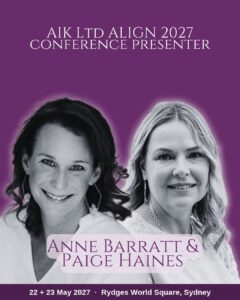
Anne Barratt is an award-winning entrepreneur, kinesiologist, counsellor and educator whose career spans corporate leadership, business, complementary health and emerging wellness technologies. Before establishing her own practice in 2012, Anne built a successful corporate marketing career, leading major brands and portfolios through significant sales growth.
Anne’s own ongoing health journey drives her continual research into modalities and technologies that explore the connections between physical, emotional, neurological and energetic wellbeing. Her multidisciplinary approach combines extensive professional training with curiosity, innovation and a passion for sharing what she learns with others.
Paige Haines is a kinesiologist, educator and frequency practitioner with more than 18 years’ experience in natural health and energy-based modalities. Originally trained as an engineer, Paige brings an analytical curiosity to her exploration of kinesiology, biofeedback and frequency-based wellness. She is a Trainer in Neurolinguistic Kinesiology and Master Practitioner in NLP, with additional training in Human Design, Biofield Tuning, Quantum K and holistic coaching. Since incorporating bioresonance technology into her work in 2020, Paige has also supported practitioners in understanding and integrating emerging frequency-based tools within their practices.
ALIGN Kinesiology Conference Welcomes
Anne Barratt & Paige Haines
Award-winning entrepreneur, Kinesiologist, Counsellor and Educator | Kinesiologist, Educator and Frequency Practitioner
Beyond the Treatment Table
The Evolution of Biofeedback, Frequency and Technology in Kinesiology explores how emerging digital technologies, wearable devices, frequency-based systems and other forms of biofeedback can complement the traditional principles of kinesiology. Building on the long-established practice of muscle monitoring as a way of exploring stress patterns and gathering information from the body, Anne Barratt and Paige Haines examine how technology may offer additional insights while supporting, rather than replacing, the knowledge, experience and intuition of the practitioner. This educational and practical presentation explores what technology-assisted wellness systems can potentially tell us, their limitations and the importance of using discernment when interpreting information. Participants will explore the difference between information and interpretation, how to combine client history, practitioner observation, muscle monitoring and technology-generated data, and why additional information should lead to better questions rather than automatic conclusions. The presentation will also consider practitioner bias, confirmation bias, scope of practice, client communication and the importance of maintaining the human therapeutic relationship as technology continues to evolve. Through practical examples and a simple framework of Observe, Ask, Test, Correlate, Intervene and Reassess, practitioners will gain a broader understanding of how emerging biofeedback tools can sit alongside their existing skills and support the continued evolution of kinesiology while retaining the principles at its heart.
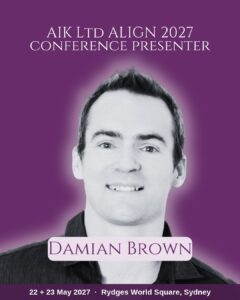
Damian Brown is a kinesiologist, naturopath, and educator with more than 20 years of clinical experience. He is the founder of Kinesiology Concepts, a leading resource for practitioners offering accredited kinesiology courses, test kits, and traditionally formulated essential oils. Damian is known for translating complex frameworks into clear, practitioner-friendly systems, blending deep academic grounding with a love of ancient wisdom drawn from Classical Chinese Medicine, Five Element theory, and Daoism. Damian teaches and mentors kinesiologists across Australia, helping practitioners bring confidence, coherence, and depth to every session.
ALIGN Kinesiology Conference Welcomes
Damien Brown
Naturopath & Kinesiologist
Balancing the Four Gates: Harmonising the Flow of Qi and Xuè
The Four Gates is one of the most well-known and widely used point combinations in Chinese medicine, first referenced in classical texts dating back to 1241 CE. It combines LI 4 on each hand with LV 3 on each foot, creating four key points that work together to help regulate, mobilise and direct Qi and Xuè (Blood) throughout the body. Known as the Gate of Qi, LI 4 and the Gate of Xuè, LV 3 mirror each other anatomically and are both Yuan (Source) points on their respective meridians, providing access to the deeper energy reserves of each organ system. This presentation explores how this classical combination, with nearly 800 years of clinical use, can be integrated into modern kinesiology practice. Drawing on the shared understanding that the body is an intelligent, self-regulating system, attendees will discover how acupressure techniques and muscle monitoring can transform the Four Gates into a valuable assessment tool and energetic correction. The session will introduce the foundations of Qi, Xuè and stagnation as underlying factors in many imbalances, before moving into practical techniques covering accurate point location, Four Gates assessment formats and correction protocols. Participants will leave with a complete, ready-to-use approach that bridges the wisdom of classical Chinese medicine with modern energetic kinesiology.
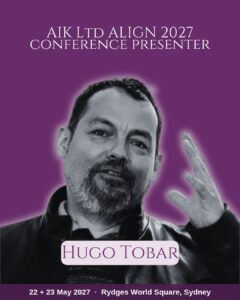
Hugo O. Tobar is the founder of Neuroenergetic Kinesiology (NK) and has been developing and teaching kinesiology courses internationally for more than 25 years.
He discovered kinesiology after returning to Australia from several years of studying Eastern philosophies in India, an experience that strongly influenced the later development of his work. Since 1998, Hugo has created an extensive body of kinesiology training integrating anatomy, physiology, neurology, traditional Chinese medicine, energetic models and stress physiology.
His work is known for bringing detailed neurological and physiological concepts into practical kinesiology frameworks, including the Triad of Balance and, more recently, the Defensive Depth Framework, a model exploring the organisation of stress and defensive responses within the nervous system.
Hugo continues to research, develop and teach new approaches to kinesiology, with a particular focus on understanding the neurological mechanisms underlying muscle testing and the role of kinesiology as a system for identifying and balancing stress.
ALIGN Kinesiology Conference Welcomes
Hugo Tobar
Founder of Neuroenergetic Kinesiology (NK)
Understanding the Defensive Depth Framework
Kinesiology as a Stress Management System: Understanding the Defensive Depth Framework explores kinesiology beyond the techniques it uses, focusing on its fundamental role in identifying and reducing stress. This presentation revisits the history and neurological foundations of muscle testing, tracing its development from its clinical beginnings through Applied Kinesiology and the emergence of specialised kinesiology, and examining how the muscle test evolved from assessing muscle function to exploring stress and neurological responses. Participants will discover how a muscle response may reflect a much broader neurological process involving sensory input, central processing, motor planning and motor output, helping explain how stress, emotions, thoughts, sensory information and physiological states can influence the response. A key focus will be Hugo O. Tobar’s new Defensive Depth Framework, which proposes that stress responses are organised across progressively deeper levels of defensive neurological processing. This model offers a way to understand why different types of stress can create different response patterns, from those readily recognised by conscious awareness to more automatic and deeply established defensive mechanisms. By bringing together the history, neurology and evolving understanding of muscle testing, the presentation introduces a contemporary perspective of kinesiology as a way of exploring the nervous system’s response to stress, with the muscle test serving as a tool for observing changes within this complex system. Participants will leave with a clearer understanding of the origins of muscle testing, what may be happening neurologically during a test, and how the Defensive Depth Framework can broaden our understanding of stress, balance and the role of kinesiology in stress management.
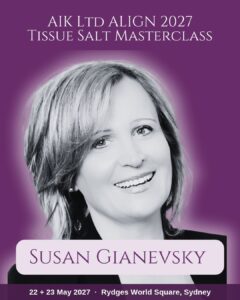
Susan Gianevsky is an educator, holds degrees in both education and natural medicine, is an author, and Global Health Ambassador for Martin & Pleasance, with over 30 years’ experience in the natural health industry.
Specialising in mineral therapy, Susan is deeply passionate about Tissue Salts and incorporates them into every health regime she develops. Through her work as an international educator, she empowers practitioners to rethink daily supplementation and embrace highly bioavailable, whole-body approaches that support long-term health, vitality and wellbeing.
My personal philosophy: “Tissue Salts are something I always consider when building a regime because I believe in starting with foundational support before adding complexity.”
ALIGN Kinesiology Conference Welcomes
Susan Gianevsky
Global Health Ambassador – National/International Training Manager (Naturopath/Homoeopath) – Martin & Pleasance
The Missing Mineral Link: Tissue Salts in Kinesiology Practice and why every practice needs them today.
Minerals are foundational to wellbeing, and understanding the role of cells and their need for support through Tissue Salts can offer practitioners another valuable perspective within kinesiology. Often described as the “missing link” in kinesiology, Tissue Salts provide a way to explore the connection between energetic balance and the body’s physical, cellular needs. While kinesiology may focus on identifying and addressing emotional and energetic stress, this presentation explores the importance of considering the mineral foundations that support the body’s everyday functions and overall wellbeing. It will look at how Tissue Salts may complement individualised kinesiology approaches, support a more whole-body perspective and provide simple, consistent protocols that practitioners can incorporate into their practice. Key areas of discussion include the relationship between energy and matter, recurring structural stress, digestive function, sub-clinical support and cellular communication. Participants will gain a broader understanding of why every kinesiology practice should include a conversation about minerals and how empowering clients with simple, everyday habits can help support their ongoing wellbeing.
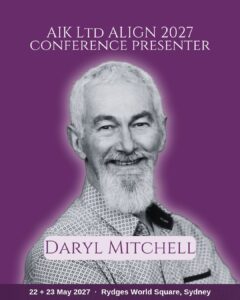
Daryl Mitchell is a Qigong master, co-founder of ZEN KI Energy and creator of Presence Field Reset (PFR). Over the last five decades, he has explored Qigong, Qi field theory, consciousness and human potential, training extensively with respected Qigong masters, teachers and lineage holders throughout China and Asia.
Daryl has guided individuals and practitioners in Qigong, meditation, energy practices and embodied presence. He is also sought for his ability to create stable and harmonious Qi environments in homes and businesses. He has lectured and presented internationally and has students worldwide.
Daryl’s connection with Kinesiology began in the 1990s. He has taught at Kinesiology Connection and presented at the 2014 AIK conference on “Thoughts and the Qi Field”.
He is an authority in his field and has been filmed in the US for upcoming documentary, The New Woo, exploring consciousness, energy and human potential.
Drawing on decades of Qigong practice and Kinesiology experience, his presentation centres on one question:
What becomes possible when the practitioner’s own state of presence becomes part of the practice?
ALIGN Kinesiology Conference Welcomes
Daryl Mitchell
Qigong master, co-founder of ZEN KI Energy, creator of Presence Field Reset (PFR) and BASM
Beyond Knowledge and Technique: The Hidden Power of the Practitioner’s State
The room changes when a practitioner walks into it, and this has less to do with what they know and more to do with who they are and the state they bring with them. Before a practitioner speaks, touches a client or begins a treatment, their nervous system, emotional state, presence and energy are already influencing the therapeutic environment. In a world of chronic stress, overstimulation and increasing emotional demands, practitioners are not immune to the pressures that can affect wellbeing, resilience and their connection to purpose. As clinical presentations become more complex, a practitioner’s ability to remain regulated, grounded and present is an important part of the therapeutic relationship, clinical decision-making and the long-term sustainability of their practice. While many kinesiologists have spent years working through their own patterns and developing greater self-awareness through muscle testing and personal healing, maintaining that awareness during a demanding clinic day, a complex case or an emotionally triggering session is a different skill, and one that is rarely taught directly. Drawing on his background as a registered Touch for Health instructor, studies in Educational Kinesiology and PKP, and decades of Qigong practice and study with lineage masters across China and Asia, Daryl Mitchell returns to a conversation he began with the kinesiology profession more than two decades ago. He will introduce Presence Field Reset (PFR), an approach designed to help the system settle, allowing emotional patterns and imprints from the past to naturally dissolve and creating space for a more present state. The presentation explores how presence is reflected in our physiology and expressed through the therapeutic relationship, and how a practitioner’s capacity for regulation and grounded awareness can support safety, connection and co-regulation within the treatment space. Attendees will leave with a practical understanding of PFR and ways to approach their own energetic hygiene and presence as valuable professional resources, inviting kinesiologists to look beyond knowledge and technique and recognise that one of the most influential instruments they bring to every consultation is their own internal state.
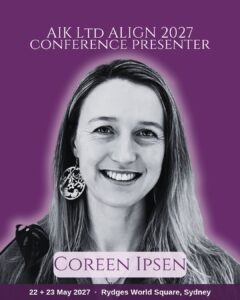
Coreen Ipsen is an Intensive Care Paramedic with 19 years’ experience in a frontline role and more than a decade working at intensive care level. Her career has provided extensive experience working alongside people during some of the most challenging and vulnerable moments of their lives.
Alongside her paramedic career, Coreen has developed a particular interest in nervous-system regulation, preventative mental health and the relationship between physiological state, emotional wellbeing and professional performance. She holds a Bachelor of Nursing, Bachelor of Pre-Hospital Care, Advanced Diploma of Paramedical Science and Diploma of Kinesiology, as well as a Certificate IV in Training and Assessment.
Coreen is the founder of The Present Paramedic, an emerging education and wellbeing initiative focused on helping emergency service professionals better understand and regulate their own nervous systems.
Her approach combines clinical experience, education and lived understanding of the realities of emergency work, with an emphasis on practical strategies that can be incorporated into everyday paramedic practice.
Her goal is to help paramedics move beyond simply enduring the demands of the profession and develop sustainable skills for maintaining their own wellbeing.
ALIGN Kinesiology Conference Welcomes
Coreen Ipsen
Intensive Care Paramedic | BN | BPreHCare | AdvDipParamedSci | DipKin
Working With the Activated Nervous System: A Paramedic Perspective
Paramedics are trained to regulate the chaos around them, assessing, prioritising and intervening while others experience some of the most frightening moments of their lives. They become highly skilled at supporting the nervous systems of others, but what happens to their own? This presentation explores the often-overlooked importance of nervous system regulation within paramedicine and emergency services, shifting the focus from managing wellbeing only after stress, burnout or trauma has occurred to developing regulation as a practical, preventative skill throughout a paramedic’s working life. Drawing on her lived experience as an Intensive Care Paramedic, alongside her background in kinesiology, Coreen Ipsen examines how the demands of emergency work can influence stress responses, interactions with colleagues and the ability to transition between high-intensity clinical situations and everyday life. Participants will explore the concept of a personal nervous system baseline and how repeated exposure to urgency, responsibility, uncertainty and distress can affect our ability to recognise when we are moving outside our optimal window of regulation. The presentation will introduce simple, practical strategies for paramedics and their first responder clients to recognise their current state and move towards greater regulation, with techniques that can be used during a shift, between jobs, after a difficult case or when transitioning home. It will also challenge the idea that resilience means being unaffected by difficult experiences, instead exploring resilience as the ability to recognise what is happening within ourselves, respond intentionally and return towards a more regulated state. The aim is not to add another task to an already demanding profession, but to provide a deeper understanding of the nervous system and a practical toolkit that can be used immediately. Ultimately, looking after our own nervous system is not separate from being a good paramedic; it is an essential part of sustaining ourselves in a profession that continually asks us to show up for others.
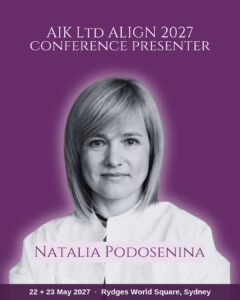
Being a doctor has been my background since childhood. In my 4th–5th year, while combining my studies with on call duties in emergency therapy, I realized: my medicine would be about people and the hope for healing. After my internship in ophthalmology, I started correcting complex vision anomalies in children and adults. Unconventional solutions and an individual approach are my inspiration.
In 2008, the clinic where I worked as a leading specialist was the first in the Ural region to master orthokeratological lenses for correcting myopia. I studied in Germany, Prague, Italy, and Moscow. I am a member of the Russian Association of Contact Correction and a participant in the international congresses of BCLA and ECLSO.
At the same time, I follow a spiritual path: India (Ayurveda), Tibet, Peru (Shapibo shamans), Bali (healing). I have been practicing Iyengar yoga for over 20 years; I don’t eat meat. My principle is: knowledge combined with inner ethics — tools for self ‑ knowledge to help those who are suffering.
In 2020, the focus shifted: the mission to help see clearly remained, but now it was about the inner world. Psychology and music therapy became a new phase in my professional life. I believe: the reason for life is love, and the world is its reflection in us.
ALIGN Kinesiology Conference Welcomes
Dr Natalia Podosenina
Doctor
The state as a frequency code for success or psychosomatics
This presentation explores the theory that a person’s internal state can be understood as a unique frequency code that influences the direction of their life, either supporting the expression of their potential or contributing to internal conflict, setbacks and psychosomatic challenges. At its centre is the concept of a primary frequency code: an individual’s unique energetic signature, likened to a tuning fork that guides them through life. The report considers how ancestral patterns, personal trauma and social conditioning may distort this sense of inner alignment, leading people to adopt beliefs and goals that are not truly their own, with emotional distress and physical symptoms viewed as signals that something may be out of balance. A key focus is emotional navigation and the role our internal state plays in understanding where we are in relation to our authentic path, exploring how suppressed or misinterpreted emotions may influence our responses, perceptions and relationships with the world around us. The presentation also examines a proposed psychosomatic pathway, considering how chronic emotional stress may influence the hypothalamic-pituitary-adrenal axis and cortisol regulation, with potential effects on immune, digestive and cardiovascular functioning. It further explores the impact of modern information overload and the defensive patterns people may develop in response, which can affect their ability to connect with their needs, purpose and potential. The practical component brings together two complementary approaches: the psychoacoustic correction method, informed by Professor S. V. Shushardzhan’s neurohumoral-resonant theory, and the Vibrational Cryptograms method of kinesiological correction, developed by rehabilitation doctor E. A. Vyatchinova, which uses sound and colour frequency parameters. Through psychological rehabilitation techniques and individually selected tuning fork frequencies, the presentation explores how these approaches may support a person’s sense of inner alignment and create space for creativity, personal growth and greater clarity. The central message is that becoming aware of and managing our internal state is an important part of personal wellbeing, with mindfulness, emotional awareness and intentional self-regulation helping us move towards a life guided by greater inner balance and purpose.
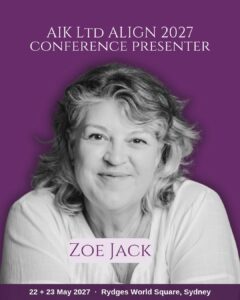
Zoe Jack is the founder of Zode Kinesiology, based in Maroubra, where she works with women through one-on-one kinesiology sessions, monthly women’s circles, and seasonal retreats. Since founding Zode in 2016, she has worked with clients from four months old to adulthood, face-to-face in Maroubra and online around the world.
Her practice integrates clinical kinesiology with embodied, intuition-led facilitation, drawing on earth-based and ancestral traditions to support women through life transitions.
Zoe is known for her belief that emotional attunement and trained intuition are not adjuncts to good kinesiology practice but central to it, and for her ability to meet clients, including young people navigating complex emotional presentations, with both clinical rigour and genuine presence.
ALIGN Kinesiology Conference Welcomes
Zoe Jack
Founder of Zode Kinesiology,
Aligned from the Inside Out: Centring Emotion and Intuition in Kinesiology Practice
Intuition isn’t simply a feeling a practitioner gets; it’s a state they can learn to access. This presentation explores how intuition can be developed as a repeatable point of access, allowing kinesiologists to move beyond reading the body’s responses through muscle testing and begin exploring deeper intuitive guidance to support clinical decision-making. While many practitioners already work with emotions through techniques such as ESR, counselling and talk-based approaches, this session takes the exploration a step further by demonstrating how intuitive awareness can be developed, accessed and applied responsibly in practice. Connected to this year’s theme of ALIGN, the presentation explores alignment not just as a structural correction, but as an energetic and intuitive state that practitioners can learn to enter intentionally. Delegates will be guided through an abbreviated version of the presenter’s own Theta-state journey, moving attention from grounding through the heart and third eye to the crown, before gently returning, as a practical demonstration of the process used to access intuitive guidance during a session. The presentation then brings this approach to life through a de-identified case study involving a teenage client experiencing disordered eating and obsessive-compulsive patterns. Through key moments in the client’s care, the presenter will explore how intuitive guidance informed decisions to introduce somatic work, creative outlets and, at times, move away from talk-based approaches, helping to support the young person’s sense of agency and control. All identifying details will be removed, with client confidentiality and professional scope of practice respected throughout. Delegates will leave with an experience of accessing a deeper intuitive state, a clearer understanding of how intuition can inform complex clinical decisions, and renewed confidence in the role of responsibly developed intuition within kinesiology practice.
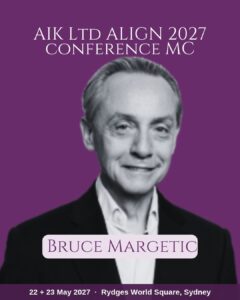
Kinesiologist, Hypnosis Practitioner & Master Practitioner, Usui Reiki Levels 1, 2 & Mastery, Meditation, Applied Physiology Level 1
ALIGN Kinesiology Conference Welcomes
Bruce Margetic
Kinesiologist, Hypnosis Practitioner & Master Practitioner, Usui Reiki Levels 1, 2 & Mastery, Meditation, Applied Physiology Level 1
MC for the ALIGN Kinesiology Conference
We are thrilled to have Bruce Margetic joining us as MC for the ALIGN Kinesiology Conference 2027! Bruce brings a wonderful blend of experience, knowledge and passion for personal growth, with qualifications as a Kinesiologist, Hypnosis Practitioner and Master Practitioner, Usui Reiki Levels 1, 2 and Mastery, Meditation, and Applied Physiology Level 1. His diverse background and connection to the world of wellbeing make him a fantastic addition to our conference. We’re excited to have his presence, warmth and energy helping guide us through what promises to be an inspiring few days of learning, connection and alignment.
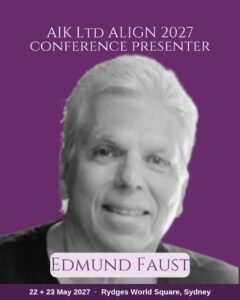
Ed has been involved with Kinesiology for over 36 years, in clinical practice and almost as long teaching nationally and internationally. His journey into Kinesiology began from personal necessity. After struggling with his health challenges and exploring nearly every Western and alternative modality, he discovered Kinesiology and experienced life-changing results, inspiring him to help others achieve the same breakthroughs.
Ed has built a thriving clinic, and has served on State and National Kinesiology committees in Australia, helping advance the profession. As Principal of Kinesiology Connection in Melbourne, he offers the ICPKP International Diploma in Kinesiology, along with electives including Quantum Neurology (balancing neurotransmitters / addressing depressive tendencies), Applied Glands & Hormones, Homotoxicology, Gastro-intestinal, Cardiovascular and other educational seminars, and the Total Body Modification modules.
Ed creates a supportive environment where clients and students feel valued and empowered. He continues to research the latest developments in the field. Outside work, he enjoys tennis and travel with his wife in Melbourne’s north-eastern suburbs.
Edmund Faust Dip Kin, Post Grad Dip Kinesiopractic®
Principal, Kinesiology Connection
ICPKP Senior International Faculty
Total Body Modification instructor
ALIGN Kinesiology Conference Welcomes
Ed Faust
Dip Kin, Post Grad Dip Kinesiopractic®, Principal, Kinesiology Connection, ICPKP Senior International Faculty, Total Body Modification instructor
Total Body Modification within the Kinesiology
Introduction to Total Body Modification (TBM) explores a comprehensive system of alternative healing developed by chiropractor and naturopath Dr Victor L. Frank and first taught in 1978. Bringing together elements of chiropractic, naturopathy, osteopathy, radionics and Applied Kinesiology, TBM works with the body’s functional physiology and autonomic nervous system, using neuro-feedback testing to identify and address patterns of imbalance through specific reflex points and correction techniques. These corrections may be performed using a TBM instrument or the practitioner’s hands, following precise patterns along the spine that correspond to different body parts and systems. Ed has integrated TBM techniques with kinesiology protocols for more than 20 years, finding that this combination has enhanced his clinical practice and allowed him to work with clients at greater depth and efficiency. As the world’s first kinesiology practitioner to qualify as a TBM trainer, Ed has demonstrated how the system can be incorporated into kinesiology sessions and teaches practitioners how to confidently integrate it into their own work. This presentation will introduce the foundations of TBM, explore how it can complement kinesiology and demonstrate its potential applications in supporting energy levels, digestion, circulation, autonomic nervous system balance, brain integration, memory, focus and emotional wellbeing. Ultimately, it highlights kinesiology as a valuable link between complementary approaches, bringing together modalities that are often taught separately into a more integrated approach to supporting the whole person.


Conference Terms and Conditions
Australian Institute of Kinesiologists Limited (AIK Ltd) Conference May 2027
Please read these Terms and Conditions carefully. By proceeding with your registration and making payment for a ticket to the Australian Institute of Kinesiologists Limited (AIK Ltd) Conference, you acknowledge that you have read, understood, and agree to be bound by these Terms and Conditions.
1. Ticket Purchase and Confirmation
1.1 All conference tickets are sold through AIK Ltd’s official registration platform and are subject to availability.
1.2 Bookings are confirmed only upon receipt of full payment.
1.3 Tickets will be emailed to the address provided during registration within 24 – 48 hours of purchase.
1.4 If you do not receive your ticket, you must contact AIK Ltd promptly so that a replacement ticket may be issued.
1.5 Lost tickets or confirmation emails may be reissued to the original purchaser upon satisfactory proof of identity and where reasonable notice is provided before the event.
1.6 Tickets remain the property of AIK Ltd until full payment is received.
2. Ticket Pricing
2.1 By purchasing a ticket, attendees agree to abide by these terms and conditions.
2.2 AIK Ltd reserves the right to change ticket prices at any time without prior notice.
2.3 Any price changes will not affect tickets that have already been purchased and paid in full.
2.4 Trade Tables and Trade Table Attendees are subject to the prices and conditions as set by the AIK Ltd; and the AIK Ltd reserves the rights to change these conditions without prior notice.
3. Event Changes and Organizer’s Rights
3.1 AIK Ltd reserves the right, at its sole discretion, to:
- Change ticket prices;
- Amend event dates and times;
- Change the venue or location;
- Modify the conference schedule or program;
- Substitute, withdraw, or add speakers, presenters, exhibitors, or sponsors;
- Alter catering, inclusions, and other event arrangements.
3.2 Such changes do not entitle ticket holders to a refund or compensation, except where required by law.
3.3 AIK Ltd does not guarantee the participation of any specific speaker, presenter, exhibitor, or sponsor.
4. Refund and Cancellation Policy
4.1 Attendee Cancellation
- More than 60 days before the event: Full refund less any applicable administration or processing fee.
- Between 30 and 60 days before the event: 50% refund of the ticket price.
- Within 10 days of the event: No refund.
- Within 10–30 days of the event: Refunds are at AIK Ltd’s discretion unless otherwise required by law.
4.2 Refund requests must be submitted in writing to AIK Ltd.
4.3 Approved refunds will be processed to the original payment method within 28 business days.
4.4 A change in personal circumstances, including illness, work commitments, travel disruption, or adverse weather affecting your travel, does not entitle you to a refund.
4.5 Giveaway or prize tickets are non-transferable and non-refundable.
5. Ticket Transfers and Substitutions
5.1 Tickets may be transferred or substituted to another individual up to fourteen (14) days prior to the event with AIK Ltd knowledge and agreement.
5.2 Unlawful resale or attempted resale of tickets is prohibited and may result in cancellation of the ticket without refund.
5.3 Tickets may not be used for advertising, promotions, contests, or sweepstakes without prior written consent from AIK Ltd.
6. Event Cancellation or Postponement by AIK Ltd
6.1 If the event is cancelled before commencement and not rescheduled, ticket holders will be entitled to a refund of the ticket price paid.
6.2 If the event is rescheduled, tickets will automatically be transferred to the new date.
6.3 If a ticket holder is unable to attend the rescheduled event, they must notify AIK Ltd within fourteen (14) days of the announcement to request a refund.
6.4 If the event is cancelled after it has commenced, no refund will be payable.
6.5 AIK Ltd’s total liability is limited to the amount paid for the ticket.
6.6 AIK Ltd is not responsible for travel, accommodation, meals, or any other incidental or consequential costs incurred by attendees.
7. Accomodation and Personal Arrangements
7.1 Attendees are responsible for arranging and paying for their own accommodation, travel, insurance, and other personal expenses.
7.2 Attendees are responsible for all purchases made from exhibitors and trade tables.
7.3 Attendees are responsible for notifying AIK Ltd of any dietary requirements or food allergies at the time of registration.
8. Code of Conduct and Admission
8.1 Attendees must behave professionally and respectfully.
8.2 AIK Ltd reserves the right to refuse entry to, or remove from the event, any person who:
- Is intoxicated;
- Behaves in a disorderly, offensive, or unlawful manner;
- Causes a disturbance; or
- Refuses to comply with reasonable directions from AIK Ltd or venue staff.
8.3 Removed attendees will not be entitled to a refund and may be excluded from future AIK Ltd events. The removed attendee may also be subject to a breach of Code of Ethics and Conduct if a member of the AIK Ltd.
9. Marketing Communications
By purchasing a ticket, you consent to receiving conference-related communications and being added to the AIK Ltd email newsletter database. You may unsubscribe from marketing communications at any time, knowing that you may miss information that is connected to your conference ticket.
10. Privacy
AIK Ltd collects and stores personal information in accordance with applicable Australian privacy laws. Personal information will be handled confidentially and used only for purposes related to event administration and AIK Ltd communications.
11. Liability and Disclaimer
11.1 To the fullest extent permitted by law, AIK Ltd is not liable for any loss, injury, damage, expense, delay, or inconvenience arising from:
- Changes to the conference program, speakers, dates, or venue;
- Cancellation or postponement of the event;
- Actions or omissions of third-party contractors, suppliers, or venues;
- Defects or failures in venues, equipment, or materials;
- Venue policies or legal regulations; or
- Circumstances beyond AIK Ltd’s reasonable control.
11.2 AIK Ltd is not responsible for any loss of or damage to personal property brought to the event.
11.3 Attendees are responsible for their own health, safety, and insurance.
12. Force Majeure
AIK Ltd shall not be liable for any delay, alteration, postponement, or cancellation of the event due to circumstances beyond its reasonable control, including but not limited to natural disasters, severe weather, pandemic, war, terrorism, industrial disputes, government restrictions, telecommunications failures, or venue unavailability.
13. Australian Consumer Law
Nothing in these Terms and Conditions excludes, restricts, or modifies any rights or remedies you may have under the Australian Consumer Law or other applicable legislation that cannot lawfully be excluded.
14. Governing Law
These Terms and Conditions are governed by the laws of New South Wales, Australia, and any disputes shall be subject to the exclusive jurisdiction of the courts of New South Wales.
15. Acceptance of Terms
By purchasing a ticket and attending the AIK Ltd Conference, you acknowledge and agree to these Terms and Conditions.